Guides
Car Seats in Ubers, Taxis and Car Services: What to Check in California
Rideshare and taxi drivers in California are not required to supply a child seat. Here is what to verify, what FMVSS 213 actually means, and how to book a car that arrives with the seat already fitted.
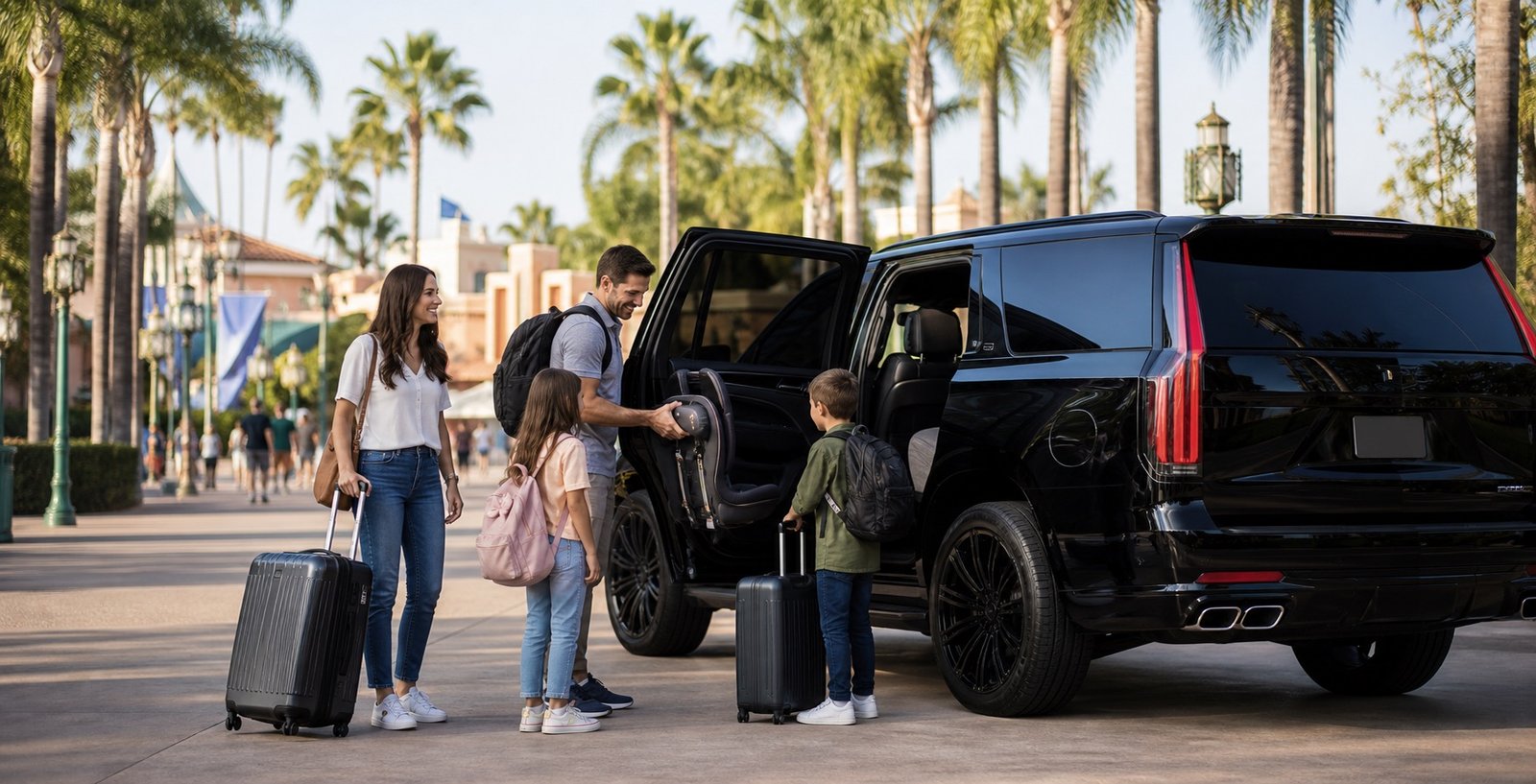
Booking a Los Angeles pickup and just want the seat handled? LAX car service with car seats covers the booking side — infant, convertible and booster seats fitted before the vehicle leaves. This guide is for working out what to ask for, and what the rules actually require.
Reputable car services do supply professionally installed, FMVSS 213 compliant infant, convertible, and booster seats, but only if you book them in advance and confirm the details in writing. When you reserve a child seat car service, give the dispatcher each child’s age and weight, the seat type you need, and your flight number for airport runs. Lux4Rides builds family transfers around this exact workflow, pairing 24/7 flight monitoring with pre-installed seats so the car is ready before you land.
TL;DR:
- Confirm in writing the exact child seat type, quantity, and vehicle details to prevent mismatched or incorrect seats upon arrival.
- Ensure the car service’s fleet seats meet FMVSS 213 safety standards and that seats are regularly inspected and not expired.
- Book well in advance by providing detailed child information and flight details, and save your confirmation screenshot to avoid last-minute issues.
- Expect the driver to properly install and secure the seat with LATCH or seat belt, and verify harness fit and recline before driving off.
- Dedicated family transfer services like Lux4Rides track flights in real time, pre-stage the correct seats, and employ vetted drivers for reliable, safe family transportation.
What a Child Seat Car Service Actually Provides
A real child seat car service does more than toss a booster in the trunk. It matches the seat to the child and pre-installs it before the driver ever reaches the curb.
- Infant/rear-facing seats, typically for babies up to a moderate toddler weight depending on the model, used until roughly age two.
- Convertible seats, which switch from rear-facing to forward-facing and generally cover kids from around 5 pounds up through 40 to 65 pounds.
- Booster seats, for kids who’ve outgrown a harnessed seat but still need height to sit properly under a seat belt, usually ages 4 through 8 or so.
Vehicle choice matters just as much as seat choice. A standard sedan comfortably fits one or two car seats depending on the base width; a family needing three seats across one bench usually needs an SUV, and larger groups or multiple seats plus luggage often call for a Sprinter van. Dispatchers who know their fleet will flag this before pickup day, not after you’re standing at baggage claim with three kids and a double stroller.
The detail that separates a good provider from a risky one is the written confirmation. It should list the exact seat type, not just “car seat requested,” so the team staging your vehicle installs the right unit before you land. Before booking, confirm: seat type and quantity, vehicle class, and a written summary you can pull up on your phone.
What Safety Standards Should You Verify?
Every child seat in a professional fleet should meet Federal Motor Vehicle Safety Standard 213, the federal performance standard for child restraints in the United States. Ask the provider directly whether their fleet seats meet FMVSS 213. A company that hesitates or can’t answer clearly is a red flag.
Beyond the standard itself, ask two more questions. First, does the company track manufacture and expiration dates on its seats, and inspect each one before every trip? Car seats degrade with age and sun exposure, and a seat that’s five years past its expiration date offers less protection than the label promises. Second, are drivers trained in LATCH installation and basic Child Passenger Safety (CPS) principles? A driver who can explain harness routing and chest clip placement without fumbling has done this before.
On arrival, watch for warning signs: a seat that looks worn, cracked, or mismatched to your child’s size, or a driver who seems unfamiliar with the installation.
How to Book a Car Service With a Child Seat
Booking early and specifically is what actually prevents problems on travel day. Follow this sequence:
- Give exact child details. Age, weight, and height for every child needing a seat, not just a headcount.
- Name the seat type. Say “convertible” or “booster,” not just “car seat,” so dispatch pulls the right unit.
- Provide flight info for airport pickups. Flight number and scheduled arrival time let the dispatch team track delays in real time.
- Request written confirmation. Ask for a summary listing seat types, vehicle class, and pickup details before you travel.
- Book with lead time. Same-day seat additions often fail during holidays and peak travel weekends, when fleets are already stretched thin.
If your travel plans change, call dispatch immediately rather than emailing and hoping. If you’re a nervous flyer or booking during a holiday rush, keep your own seat as backup just in case.
Pro Tip: Save your written confirmation as a screenshot before you leave for the airport. If there’s ever a mismatch at pickup, you have proof of exactly what you requested.
Parents managing multiple scheduled activities already know that specificity at booking time saves headaches later. The same discipline that works for swim lesson booking best practices for parents applies just as well here: name exactly what you need, get it in writing, and book before the last-minute crunch.
How Much Does a Car Service With a Car Seat Cost?
Pricing patterns vary by provider, so ask about these specifics before you book:
- Whether the seat is built into the flat rate or billed as a per-seat surcharge, commonly in the $10 to $40 range depending on the company.
- Whether multiple children require a larger vehicle class, which can raise the total price beyond the base fare.
- Whether the quote includes wait time, tolls, and gratuity, or whether those get added afterward.
Some providers advertise complimentary seats at no added cost, while others charge per seat. Ask directly: “Can you send a written price breakdown that separates the base fare, the seat fee if any, and any additional charges?” Getting that in text avoids surprises at drop-off.
What Happens at Pickup With a Pre-Installed Seat?
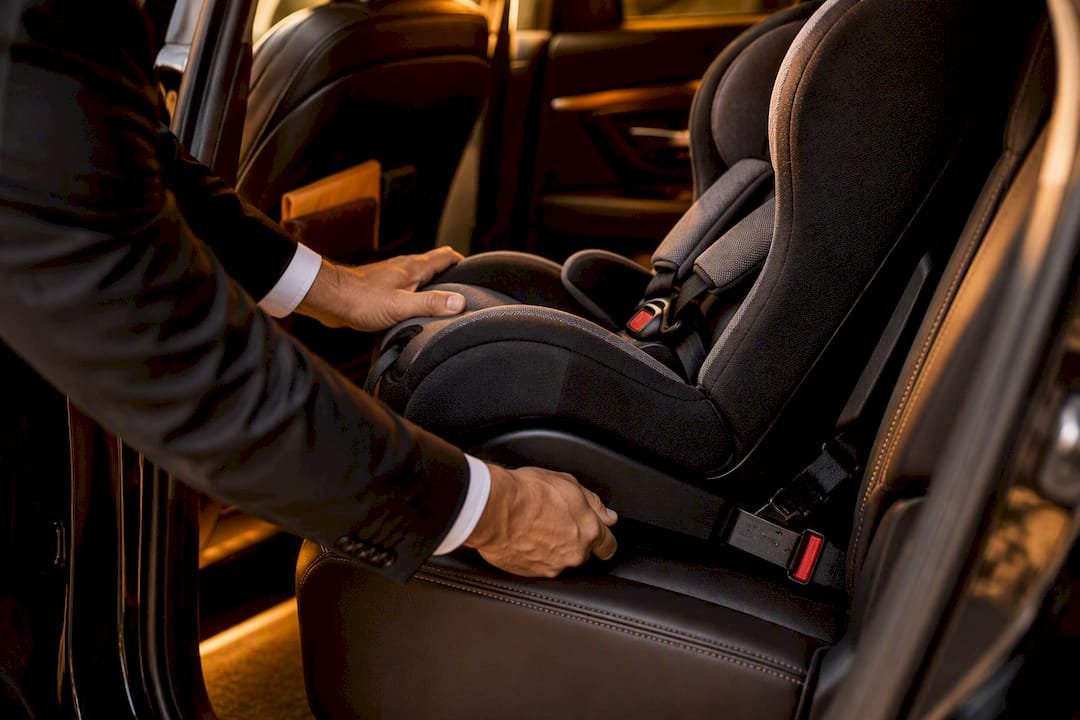
A professional driver anchors the seat using LATCH connectors or the vehicle seat belt, performs a tug test to confirm it doesn’t shift more than an inch, and routes the harness correctly for the child’s size. For infant seats, the recline angle matters too, since an upright angle can affect an infant’s airway.
For airport pickups, the driver stages near arrivals and tracks your flight, so a delayed landing doesn’t mean a delayed, unprepared car. Most services build in a complimentary wait window before charges start.
Before you drive off, do your own thirty-second check:
- Pull the harness at the shoulder. It shouldn’t have obvious slack.
- Confirm the chest clip sits at armpit level, not on the belly or the throat.
- For infants, glance at the recline angle to make sure the seat isn’t too upright.
If anything feels off, ask the driver to reinstall or recheck before you leave the curb. A good driver won’t take offense.
How Lux4Rides Handles Family Bookings and Child Seats
Some family car services manage bookings to address common risks parents worry about most: missed pickups, the wrong seat showing up, and last-minute add requests that fall through during busy travel days. They may employ live dispatch teams that track flights in real time to help avoid leaving families waiting without a car or seat. Chauffeurs may be background-verified, and fleets can include vehicles suitably sized for families needing one seat or several.
A family shouldn’t have to gamble on whether the car seat waiting at arrivals is the right one, installed correctly, by a driver who’s done it before. That’s the entire premise behind booking a dedicated family transfer instead of rolling the dice on a rideshare.
For routes families book most often, the LAX to Disneyland transfer page details seat options and timing tips specific to that trip.
What Most Booking Advice Gets Wrong
Most advice on this topic focuses entirely on seat mechanics — LATCH versus seat belt, rear-facing angles, harness height. That’s real information, but it skips the part that actually causes failures. Seats rarely fail because a driver installed them wrong. Bookings fail because nobody wrote down the seat type, the dispatcher guessed, and the wrong unit showed up at the curb.
The conventional wisdom treats car seat safety as a mechanical problem. It’s really a communication problem. FMVSS 213 compliance matters, and inspection routines matter, but neither one helps if the confirmation email just says “car seat” with no specifics. Parents who get the best results treat booking like filling out a medical form: exact numbers, exact seat type, nothing left to interpretation.
If you take one thing from this article, prioritize the written confirmation over everything else. It’s the cheapest, fastest safeguard available, and it’s the one step most families skip because it feels unnecessary. It isn’t. A provider with strong flight tracking and trained drivers still needs accurate information to act on.
Book a Family Transfer With Lux4Rides
Rideshare apps make you gamble on whether a seat is available, correctly sized, or installed at all, and that’s exactly where a dedicated child seat car service earns its keep. Certain family transfer services focus on 24/7 dispatch, real-time flight tracking, and vetted chauffeurs who pre-stage the right seat before arrival, catering to requests ranging from a single infant seat to multiple seats in larger vehicles.
When you book, tell the team each child’s age and weight, the seat type you want, and your flight number if you’re arriving at LAX. That’s what lets dispatch prepare the car in advance instead of scrambling at the curb. Families flying into Southern California can check flat rates and routes on the LAX flat-rate price list, covering transfers to Disneyland, Beverly Hills, Santa Monica, and beyond, or look at the black car service page for a vehicle class comparison before locking in a reservation.
Sources
FAQ
Is there a service like Uber for kids?
Dedicated family car services exist specifically for this need, offering pre-installed, age-appropriate seats rather than a generic rideshare pickup. Lux4Rides is one option built around this model, pairing seat requests with flight tracking and vetted chauffeurs for families in the Los Angeles and Orange County area.
Is there Uber with kids’ car seats?
Uber has historically offered a car-seat option using a convertible seat rated for children roughly 5 to 65 pounds and under 49 inches, though availability varies by city and isn’t guaranteed on demand. Dedicated family car services generally offer more seat variety and advance confirmation than a rideshare add-on.
How much does Uber charge for a car seat?
Uber’s car-seat option has historically carried a surcharge around $10 per trip, though pricing and availability can shift by market. Dedicated car services often price seats differently, sometimes bundled into a flat rate and sometimes charged as a separate fee in the $10 to $40 range.
Who can help with a car seat if I don’t own one?
A family-focused car service can supply and install an appropriate seat when you specify the child’s age, weight, and seat type at booking. Confirming this in writing before your trip, rather than assuming it’ll be handled, is the step most parents skip and later regret.