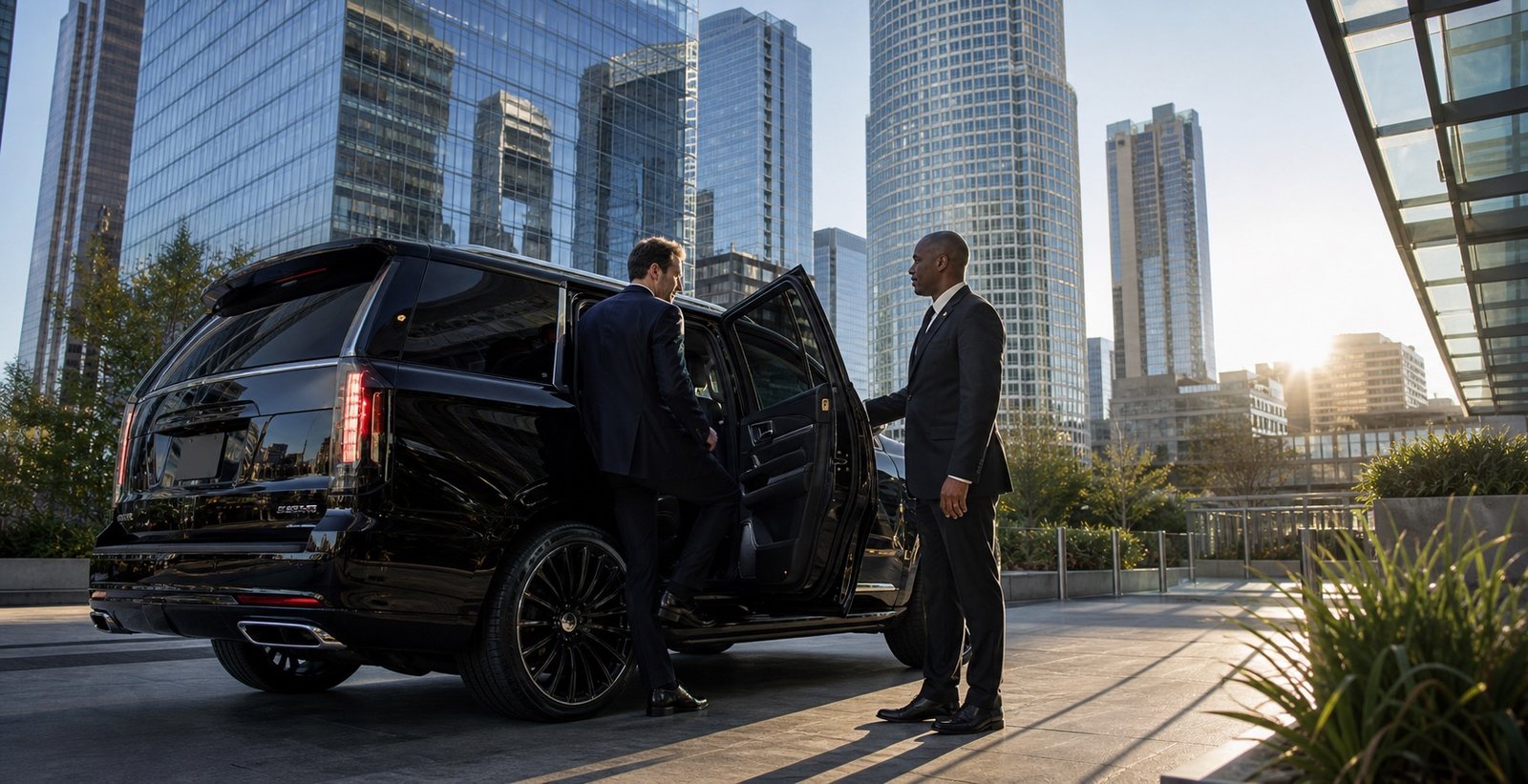

Corporate Event Transportation in Los Angeles
Transportation for corporate events across Los Angeles — arrivals at LAX and Burbank, hotel-to-venue transfers, executive movement, and staged departures — run by one dispatch contact against your schedule rather than a scatter of individual bookings.
Corporate event transportation is a coordination problem before it is a vehicle problem. The cars are the easy part; what determines whether it works is whether one team is holding the whole schedule.
We run corporate events as a single account with one named dispatch contact, a mixed fleet of sedans, SUVs and Sprinters assigned to the actual movements, chauffeurs briefed on the run of show, and staged departures so two hundred people do not all reach the door at once.
Practically that means: flight-tracked arrivals, hotel and venue transfers, executive and speaker movement handled separately from general guests, consolidated billing, and a certificate of insurance for your procurement or venue file. Licensed under California TCP #40987 (CPUC), $5M commercial insurance.
Where Corporate Event Transport Actually Goes Wrong
Almost nobody books event transportation badly on purpose. It goes wrong because it gets distributed: the travel team books flights, an assistant books a few cars, the venue recommends someone else, and nobody holds the complete picture. Then a flight lands late, a session overruns, and there is no single person who can see both problems and move a vehicle.
The symptoms are always the same. Executives waiting outside a hotel because their car was assigned to a guest run. A speaker arriving after their session started. Two hundred guests reaching the door simultaneously at the end of the night with four vehicles available. None of it is a driving failure — it is a coordination failure.
Running the event as one account fixes the structure. One dispatch contact holds the schedule, the fleet is assigned against real movements rather than guesses, chauffeurs are briefed on the run of show, and when something slips there is someone with the authority and the visibility to reallocate a vehicle in the moment.
At a glance
| Best for | Company offsites, client events, product launches, board and investor meetings, sales kick-offs, holiday parties and award nights. |
|---|---|
| Point of contact | One named dispatch contact for the whole event, staffed 24/7 — not a different number per vehicle. |
| Vehicles | Executive sedans (1–3), Cadillac Escalade and Suburban SUVs (up to 6), Mercedes Sprinter vans for groups — mixed into one fleet as the event requires. |
| Airport arrivals | Flight-tracked with 35 minutes of complimentary wait time measured from landing; guests met at the terminal, never sent to the LAX-it rideshare lot. |
| Executive movement | Handled separately from general guest transport, with dedicated vehicles and chauffeurs where required. |
| Departures | Staged in waves so the venue door is not overwhelmed at the end of the night. |
| Billing | Consolidated invoicing to the company, itemised for internal coding and cost centres. |
| Certificate of insurance | Issued on request for procurement, venue and production vendor files. |
| Lead time | As early as possible for large events and peak season; short-notice requests are handled subject to availability. |
| Contingency | Spare capacity and a documented fallback plan agreed before the event, not improvised on the night. |
What We Cover Across a Corporate Event
Arrivals. Attendees and executives landing at LAX, Burbank, John Wayne or Long Beach, often across dozens of different flights. Each is tracked against its actual landing rather than the schedule, with 35 minutes of complimentary wait time measured from landing, and guests are met at the terminal rather than sent to a rideshare lot. The picking someone up at LAX guide explains why that distinction matters at this airport.
Hotel and venue transfers. The movements between the room block and the event, run to the schedule rather than on demand. Where volume justifies it, a continuous guest shuttle is more efficient than individual cars.
Executive and speaker movement. Kept deliberately separate from general guest transport. Executives, board members and speakers have fixed commitments that cannot absorb a delay caused by a guest run, so they get dedicated vehicles and chauffeurs.
Evening and offsite programmes. Dinners, receptions and activities, including the return legs that are usually the least planned part of an event.
Departures. Staged in waves against flight times so the venue door is not overwhelmed and nobody sits in a lobby for an hour.
Spillover and contingency. Spare capacity agreed in advance, so a delayed flight or an overrunning session is absorbed rather than escalated.
How we set up a corporate event
-
Share the run of show
Dates, venues, headcount, and what the event is actually doing hour by hour.
-
We map movements to vehicles
Arrivals, transfers, executive movement and departures — matched to sedans, SUVs and Sprinters.
-
Compliance handled early
Certificate of insurance, venue access requirements and any procurement paperwork.
-
A named dispatch contact assigned
One person holding the whole schedule, reachable 24/7 throughout the event.
-
Chauffeurs briefed on the event
Entrances, staging points, priority movements and waiting positions — not just addresses.
-
Live coordination on the day
Flights tracked, vehicles reallocated as the schedule moves, departures staged in waves.
One coordinated account vs. booking cars separately
| Separate bookings | One coordinated account | |
|---|---|---|
| Who holds the schedule | Nobody — it is split across people | One named dispatch contact |
| When a flight slips | Each booking fails on its own | Vehicles reallocated in real time |
| Executive movement | Competes with guest transport | Dedicated vehicles and chauffeurs |
| Departures | Everyone at the door at once | Staged in waves against flight times |
| Vehicle mix | Whatever each booker chose | Matched to the actual movements |
| Billing | Scattered expense claims | One itemised invoice, coded by cost centre |
| Compliance | Varies per supplier | One COI, one licensed operator |
Certificate of insurance available on request. California TCP #40987 (CPUC), $5M commercial insurance.
Corporate event transport: what to get right
Do this
- Share the run of show, not just a list of pickup times.
- Book return and end-of-night legs at the same time as arrivals.
- Separate executive and speaker movement from general guest transport.
- Give an honest headcount early — availability tightens in peak season.
- Raise COI and venue access requirements at the start.
- Agree the contingency plan before the event, not on the night.
Avoid this
- Splitting transport across three vendors to save a little.
- Assuming the end of the evening will sort itself out.
- Booking one vehicle type for every kind of movement.
- Leaving insurance paperwork to the week of the event.
- Sending executives to a rideshare lot after a long flight.
- Guessing headcount and hoping to add vehicles late.
How the Account Is Run
One named dispatch contact. The single most valuable thing we provide. They hold the full schedule, know the vehicle assignments, and can reallocate in real time. Your planner or assistant has one number rather than a list.
A fleet mixed to the movements. Sedans for individual executives, SUVs for small groups and luggage, Sprinters for larger transfers. Most corporate events need a mix, and matching vehicle to movement is where cost efficiency actually comes from — not from booking the cheapest vehicle for everything.
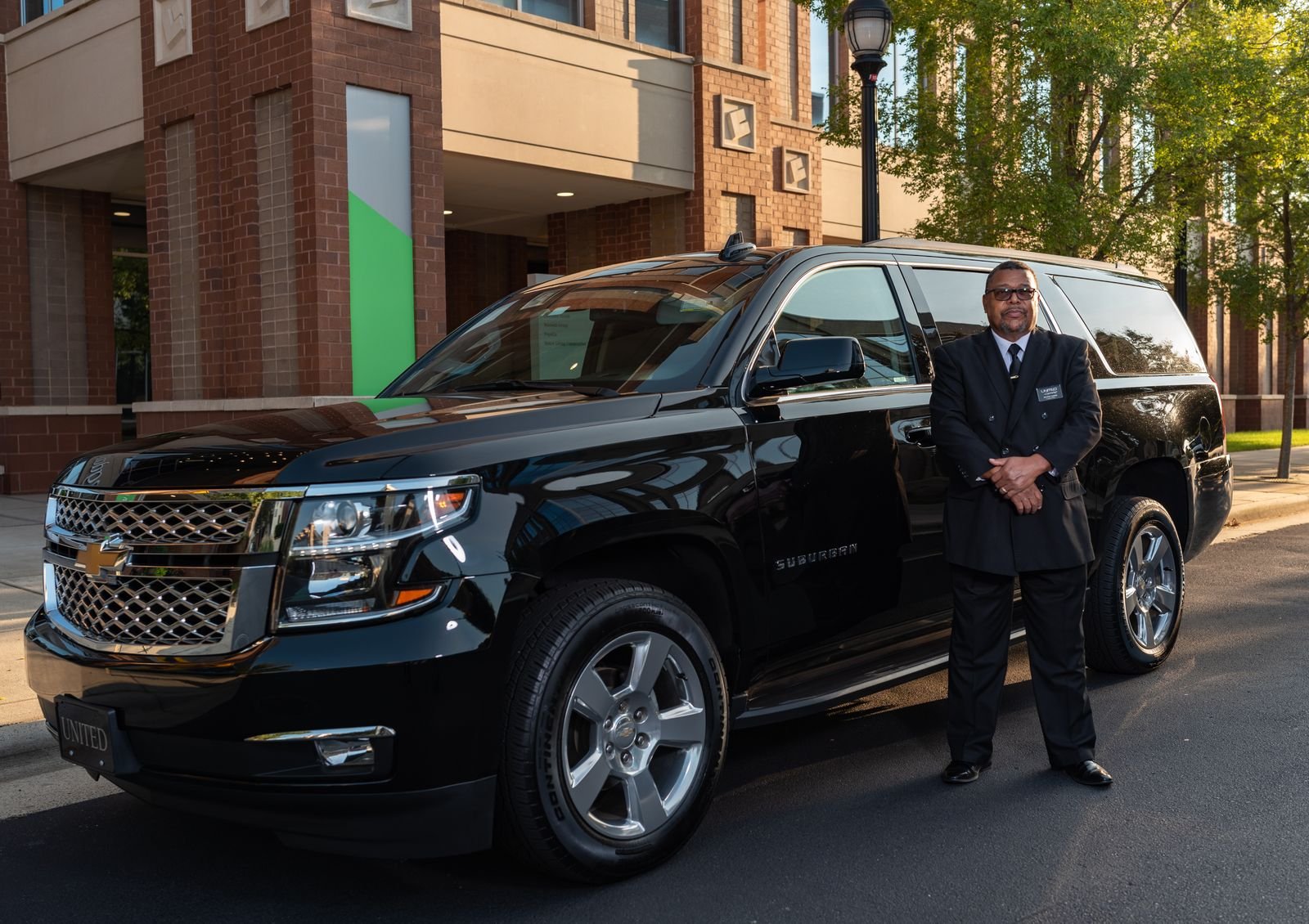
Chauffeurs briefed on the event. Not just an address. Venue entrances, staging points, which guests are priority movements, and where to wait. Chauffeurs are pre-selected, background-checked professionals.
Schedule-first planning. We work from your run of show, not from a list of pickup times, so the transport plan reflects what the event is actually doing.
Consolidated billing. One invoice to the company, itemised by movement so it can be coded to the right cost centre — considerably easier to reconcile than expense claims from thirty attendees.
Compliance. California TCP #40987 (CPUC), $5M commercial insurance, with a certificate of insurance issued on request for procurement or venue files. Many corporate venues and production companies require this before a vehicle is allowed on site; ask early rather than the week of the event.
Planning Notes That Save Money and Trouble
Book the return legs at the same time as the outbound. The end of the evening is where most events fail, because it is the one movement everyone assumes will sort itself out.
Give us the run of show, not just pickup times. Knowing that a session ends at 4.30 and the reception starts at 6.00 tells us more about what the transport needs to do than a list of times ever will.
Separate executives from general guests in the plan. It costs slightly more in vehicles and saves the thing you actually care about.
Be honest about numbers early. Vehicle availability in Los Angeles tightens sharply around award season, major conferences and the holiday period. An accurate estimate booked early beats a precise number booked late.
Agree the contingency in advance. What happens if a flight is two hours late, or if a session overruns by forty minutes? Deciding that beforehand is what separates a managed event from an improvised one.
Raise insurance and venue requirements at the start. Certificates of insurance, venue access credentials and staging permissions all take time.
Use one vendor. Splitting across three suppliers to save a small amount reintroduces exactly the coordination problem the single account solves.
Choose your vehicle
Tell us your passenger and luggage count and we’ll recommend the right vehicle — every car late-model, immaculate, and driven by a pre-selected professional chauffeur.
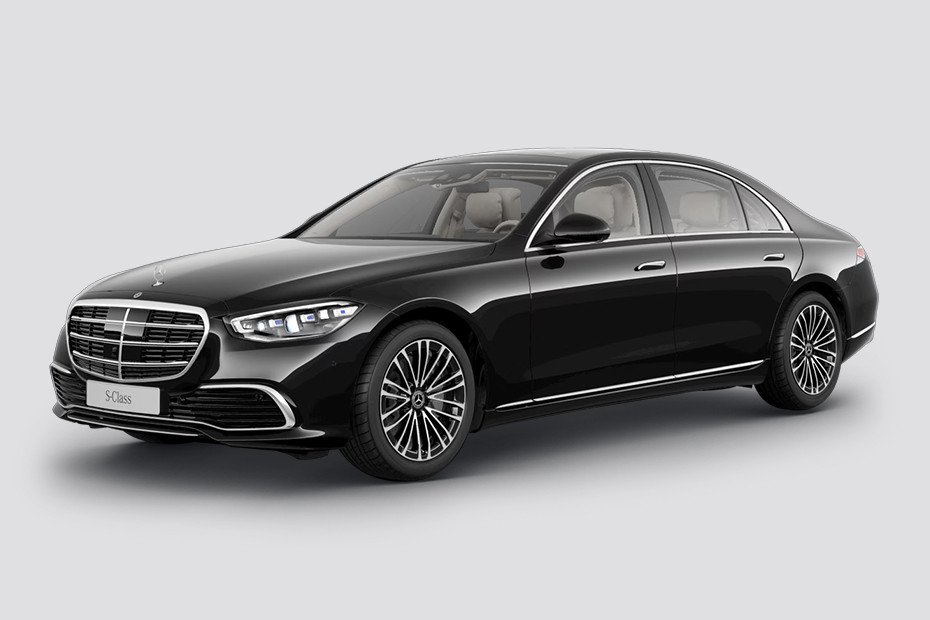
Executive Sedan
Mercedes S-Class class. Quiet, business-ready comfort for 1–3 passengers with luggage.
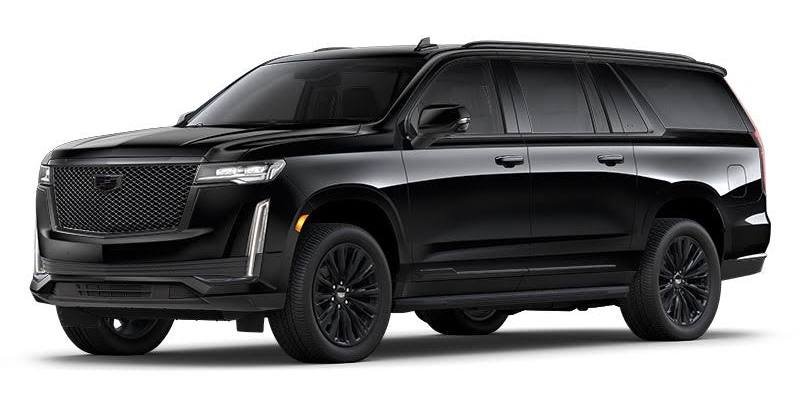
Luxury SUV
Cadillac Escalade / Suburban for families, extra luggage, and a higher, statelier ride.

Sprinter Van
Mercedes Sprinter for groups, crews, and events with plenty of cargo room.
A better ride starts with a better-treated chauffeur
Lux4Rides was built by CEO Sam Altabbaa on a simple idea: pay professional chauffeurs fairly and you get calmer, safer, more gracious rides. Cut-rate apps squeeze drivers — and you feel it in the car. We don’t.
Chauffeurs paid fairly
Our drivers earn a real, respectful wage — so they’re relaxed, professional, and genuinely glad to take care of you.
Hand-selected & VIP-trained
Every chauffeur is pre-selected, background-checked, TCP-licensed, and trained to a discreet VIP standard — no random gig drivers.
Flat rates, no surge
The price you see is the price you pay — no peak-hour surge, no hidden fees, and 24/7 dispatch that watches your flight.
Related event and corporate services
Corporate Event Transportation in Los Angeles FAQ
Typically airport arrivals across many flights, hotel and venue transfers, executive and speaker movement, evening and offsite programmes, and staged departures — all run against your run of show by one named dispatch contact, with a mixed fleet of sedans, SUVs and Sprinter vans assigned to the actual movements.
Yes. Lux4Rides operates under California TCP #40987 (CPUC), $5M commercial insurance, and a certificate of insurance is issued on request for procurement, venue or production vendor files. Many venues require it before a vehicle is allowed on site, so ask early rather than in the final week.
As early as you can for anything large or in peak season. Vehicle availability across Los Angeles tightens sharply around award season, major conferences and the holiday period. An accurate estimate booked early is worth more than a precise number booked late.
Yes — a named dispatch contact who holds the entire schedule, knows the vehicle assignments and can reallocate in real time, reachable 24/7 throughout the event. Your planner or assistant deals with one person rather than a list of drivers.
Consolidated invoicing to the company, itemised by movement so costs can be coded to the right cost centre or department. It is considerably easier to reconcile than collecting expense claims from every attendee.
Yes, and we recommend it. Executives, board members and speakers have fixed commitments that cannot absorb a delay caused by a guest run, so they are assigned dedicated vehicles and chauffeurs. It costs slightly more in vehicles and protects the movements that matter most.
Arrivals are tracked against actual landings rather than schedules, with 35 minutes of complimentary wait time measured from landing. Because one dispatch contact holds the whole plan, a delayed flight results in a vehicle being reallocated rather than a booking failing in isolation.
Yes — Hollywood Burbank, John Wayne, Long Beach and Ontario as well as LAX, plus private aviation terminals. Attendees frequently arrive across several airports, and all of it runs through the same account.
Yes. Departures are staged in waves against guests' flight times so the venue door is not overwhelmed at the end of the night. Where volume justifies it, a continuous guest shuttle handles the bulk while dedicated cars handle priority departures.
Planning more than a single ride?
Running a multi-day programme, a launch with press movement, or a conference with several hundred arrivals? Email vip@lux4rides.com or call (424) 209-8001.
Plan your corporate event transportation
Send us the run of show and we will map the movements, size the fleet and assign a named dispatch contact. Email vip@lux4rides.com or call (424) 209-8001 — certificate of insurance available on request.