
Run of Show Transportation in Los Angeles
Transportation built from your run of show rather than a list of pickup times — movements timed to what the programme is actually doing, chauffeurs staged against it, and dispatch adjusting live as the schedule moves.
A run of show is the minute-by-minute plan of what happens at an event. Transportation planned against it behaves completely differently from transportation booked as a list of pickup times.
The difference shows the moment something moves — and something always moves. A list of pickup times has no way to respond to a session overrunning by twenty minutes. A transport plan built from the programme knows which movements that session feeds, which are now at risk, and which vehicles can be reallocated.
What it involves in practice: movements derived from programme milestones, dependencies mapped so a slip in one place shows its downstream effects, chauffeur staging planned around cue points, a documented contingency, and one dispatch contact holding it live throughout the event.
Pickup Times Are a Guess. A Programme Is a Fact.
Most event transport is booked as a list of times: a car at 09:00, three at 14:30, six at 22:00. Those numbers came from somewhere — usually somebody looking at a draft agenda weeks earlier and estimating. By the time the event runs, the agenda has moved and the times have not.
A run of show is different because it describes relationships, not just moments. The keynote ends and the room breaks. Doors open thirty minutes before the ceremony. The honouree has a hard out at ten. Those are the facts transport should be planned against, because when one of them moves, everything connected to it moves in a knowable way.
Planning from the programme means we can answer the question that actually matters on an event day: the afternoon session has overrun by twenty-five minutes — what breaks, what still holds, and what do we move? A list of pickup times cannot answer that. A dependency-mapped transport plan can, and dispatch can act on the answer while there is still time.
At a glance
| Planned from | Your run of show — the programme, not a list of pickup times. |
|---|---|
| Movements derived from | Programme milestones: session ends, doors, cue points, hard outs and curtain times. |
| Dependencies | Mapped, so a slip in one movement shows what it puts at risk downstream. |
| Chauffeur staging | Positioned against cue points rather than clock times. |
| Point of contact | One named dispatch contact for the whole event, staffed 24/7. |
| Live adjustment | Dispatch reallocates as the programme moves — this is the core of the service. |
| Contingency | Documented before the event: what happens if X runs late, agreed in advance. |
| Best for | Productions, award shows, conferences, launches, broadcast and multi-session programmes. |
| Certificate of insurance | Issued on request for venue, production and procurement files. |
| Licensing | California TCP #40987 (CPUC), $5M commercial insurance. |
How a Transport Plan Is Built From a Programme
We start with the run of show, in whatever state it exists — a draft is fine and early is better than complete.
Movements are derived from milestones. Rather than asking for pickup times, we identify what the programme requires: guests at the venue before doors, the speaker on site ahead of their session, talent departing at a hard out, the room clearing after the closing remarks. Each becomes a movement with a trigger tied to the programme.
Dependencies are mapped. If the afternoon session feeds the reception transfer, that link is recorded. When the session slips, dispatch immediately knows which movements are affected rather than discovering it when a chauffeur calls in.
Staging is planned around cue points. Chauffeurs are positioned against what the programme is doing, so vehicles are ready when a milestone lands rather than being summoned afterwards.
Critical movements are identified and protected. Some movements can flex by twenty minutes and some cannot. The ones that cannot get dedicated vehicles and contingency — the same treatment as VIP hospitality movements.
Contingency is documented in advance. What happens if the keynote overruns, if a flight is two hours late, if the ceremony starts twenty minutes behind. Deciding those responses beforehand is the difference between adjusting and improvising.
The plan is held live by one dispatch contact throughout the event.
Building transport against a run of show
-
Send the programme, even in draft
Early and incomplete beats late and final. We work from what the event is doing.
-
Movements derived from milestones
Doors, session ends, cue points and hard outs — each becomes a movement with a trigger.
-
Dependencies mapped
So a slip in one place immediately shows what it puts at risk downstream.
-
Critical movements protected
The ones that cannot flex get dedicated vehicles and their own contingency.
-
Contingency agreed in writing
What happens if the keynote overruns, or a flight lands two hours late.
-
Dispatch holds it live
One contact adjusting through the event, telling production early when something cannot be recovered.
Pickup-time booking vs. run-of-show planning
| A list of pickup times | Planned to the run of show | |
|---|---|---|
| Where times come from | Estimated weeks earlier from a draft agenda | Derived from programme milestones |
| When the schedule moves | Times are simply wrong | Dependencies show what is affected |
| Chauffeur staging | Clock times | Positioned against cue points |
| Critical movements | Treated like any other | Identified, dedicated and protected |
| Contingency | Improvised | Documented before the event |
| Who adjusts | Whoever notices | One dispatch contact holding the live plan |
| Communication | Guests call drivers | Dispatch redirects chauffeurs centrally |
Suits tight timing more than large scale — a three-vehicle event with a hard curtain benefits more than a ten-vehicle event with a loose schedule.
Getting run-of-show transport right
Do this
- Send the programme early, even as a rough draft.
- Name the movements that genuinely cannot flex.
- Tell us which sessions feed which transfers.
- Agree contingency responses in writing beforehand.
- Give dispatch a production contact for live changes.
- Plan departures as sequenced waves against hard outs.
Avoid this
- Handing over a list of pickup times with no programme.
- Treating every movement as equally critical.
- Waiting until the agenda is final to start planning.
- Letting guests call chauffeurs directly to make changes.
- Assuming a twenty-minute overrun affects only one movement.
- Discovering a hard out on the day it matters.
What Live Adjustment Actually Looks Like
The plan is not the product. The ability to change it correctly, quickly, is.
Dispatch holds the current state. One person, reachable 24/7 for the duration, with the whole movement list, the vehicle assignments and the dependency map in front of them.
Chauffeurs are coordinated centrally. When a movement changes, dispatch redirects the chauffeurs — guests and production staff are never handed a list of driver numbers and asked to sort it out themselves.
Slippage is absorbed by design. When a session overruns, dispatch looks at what that movement feeds, checks which vehicles are committed, and reallocates from the contingency or from movements with genuine slack. The goal is that the critical movements stay intact.
Production is told what changed. If a movement cannot be recovered, the stage manager or planner hears it from us early rather than discovering it at the door. Early bad news is manageable; late bad news is not.
Flights are tracked automatically. Arrivals are monitored against actual landings with 35 minutes of complimentary wait time measured from landing, so an inbound delay is already visible to dispatch before anyone thinks to ask.
Departures are sequenced. End-of-programme movements are released in waves against flight times and priority rather than all at once — the mechanics are covered on multi-vehicle event transportation.
Where This Discipline Matters Most
Productions and broadcast. Call times, load-in, crew movements and talent arrivals all keyed to a schedule that is genuinely unforgiving. Crew and equipment travel together in Sprinter vans.
Award shows and ceremonies. Arrival sequencing at a controlled entrance, honourees timed against the programme, and departures at hard outs.
Conferences with parallel sessions. Multiple rooms running on their own timings, speakers moving between venues, and transfers that depend on when sessions actually end rather than when the agenda says they will. Conference transportation covers the broader event type.
Product launches and press events. Press movements, embargo timings and a programme that has to hit specific moments.
Multi-venue evenings. Ceremony to reception to after-party, where each move depends on the previous one finishing.
Executive programmes. Board meetings and investor days where principals have fixed commitments either side of the event.
The common factor is not scale. A ten-vehicle event with a loose schedule needs less of this than a three-vehicle event with a hard curtain time. It is the tightness of the timing, not the size of the fleet, that decides whether run-of-show planning earns its place.
Choose your vehicle
Tell us your passenger and luggage count and we’ll recommend the right vehicle — every car late-model, immaculate, and driven by a pre-selected professional chauffeur.

Executive Sedan
Mercedes S-Class class. Quiet, business-ready comfort for 1–3 passengers with luggage.

Luxury SUV
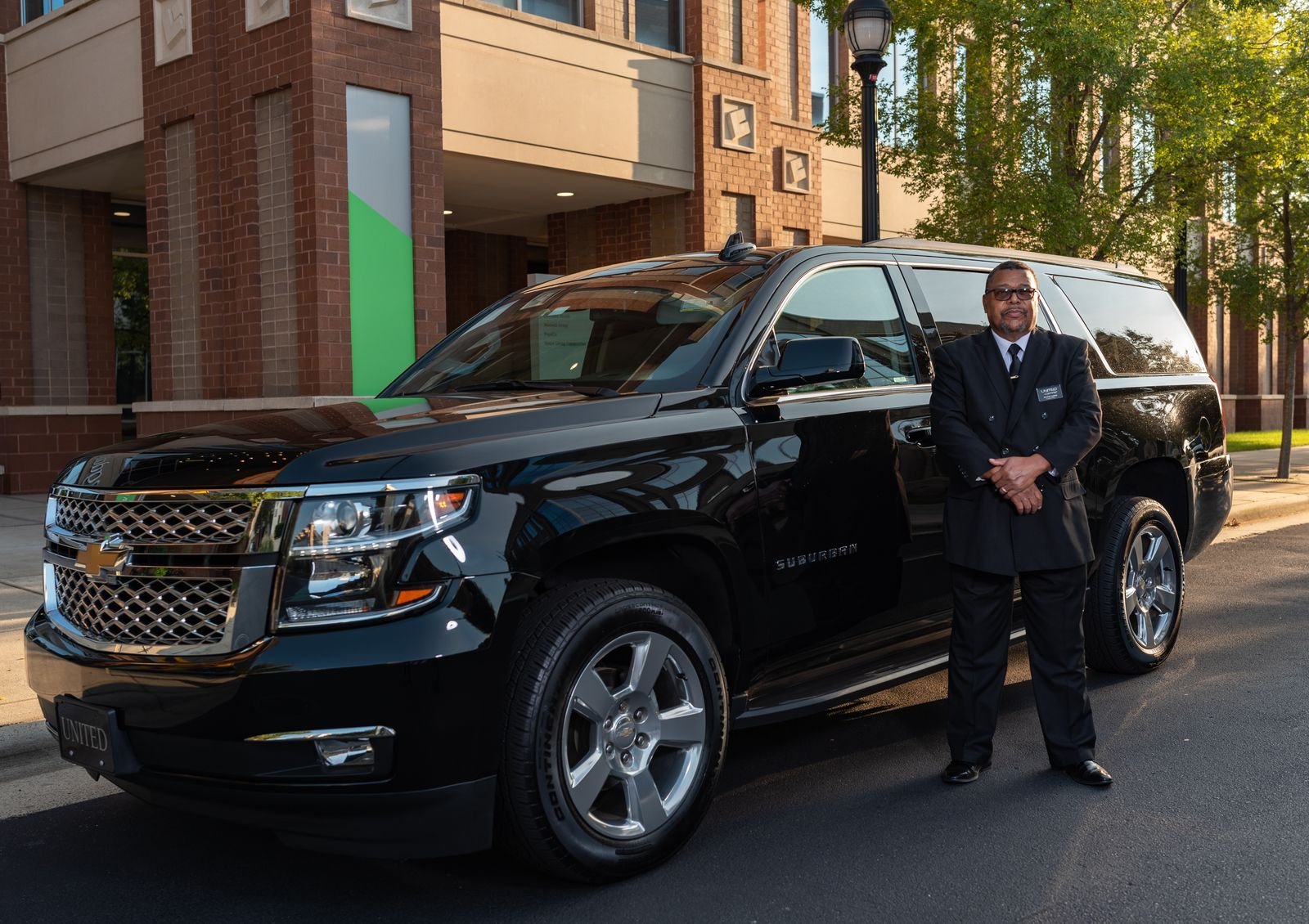
Cadillac Escalade / Suburban for families, extra luggage, and a higher, statelier ride.

Sprinter Van
Mercedes Sprinter for groups, crews, and events with plenty of cargo room.
A better ride starts with a better-treated chauffeur
Lux4Rides was built by CEO Sam Altabbaa on a simple idea: pay professional chauffeurs fairly and you get calmer, safer, more gracious rides. Cut-rate apps squeeze drivers — and you feel it in the car. We don’t.
Chauffeurs paid fairly
Our drivers earn a real, respectful wage — so they’re relaxed, professional, and genuinely glad to take care of you.
Hand-selected & VIP-trained
Every chauffeur is pre-selected, background-checked, TCP-licensed, and trained to a discreet VIP standard — no random gig drivers.
Flat rates, no surge
The price you see is the price you pay — no peak-hour surge, no hidden fees, and 24/7 dispatch that watches your flight.
Related event and corporate services
Run of Show Transportation in Los Angeles FAQ
Transportation planned against the event's minute-by-minute programme rather than booked as a list of pickup times. Movements are derived from programme milestones such as doors, session ends and hard outs, dependencies between movements are mapped, and one dispatch contact holds the plan live and adjusts as the schedule moves.
Because pickup times are estimates made weeks earlier from a draft agenda, and they have no way to respond when something moves. A plan built from the programme can answer the question that matters on the day: the session has overrun by twenty-five minutes, so what breaks, what holds, and what do we move?
No — a draft is fine and early is considerably better than complete. We would rather start from a rough programme eight weeks out and refine it than receive a final version the week of the event.
Dispatch checks what that movement feeds, identifies which downstream movements are now at risk, and reallocates from contingency or from movements with genuine slack — protecting the critical ones. If something cannot be recovered, production is told early rather than discovering it at the door.
Centrally, by dispatch. Chauffeurs are staged against cue points and redirected by dispatch when the programme moves. Guests and production staff are never handed a list of driver numbers and asked to coordinate it themselves.
No — it suits tight timing more than large scale. A three-vehicle event with a hard curtain time benefits from this discipline more than a ten-vehicle event with a loose schedule. What matters is whether the timing is unforgiving, not how many vehicles are involved.
Documented before the event. We agree in writing what happens if the keynote overruns, if a flight lands two hours late, or if the ceremony starts behind schedule. Deciding those responses in advance is the difference between adjusting and improvising.
Yes. Dispatch takes a production contact for live changes and communicates directly with stage management, the planner or the production coordinator throughout, so transport decisions are made against what the room is actually doing.
Yes. Arrivals are tracked against actual landings with 35 minutes of complimentary wait time measured from landing, so an inbound delay is visible to dispatch before anyone thinks to ask, and its downstream effect on the programme can be dealt with early.
Planning more than a single ride?
Running a production with hard call times, a ceremony with a curtain, or a conference with parallel sessions? Email vip@lux4rides.com or call (424) 209-8001.
Send us your run of show
Even a draft. We will derive the movements, map the dependencies, protect what cannot flex and agree the contingency in writing. Email vip@lux4rides.com or call (424) 209-8001.