Sprinter Van Event Transportation in Los Angeles
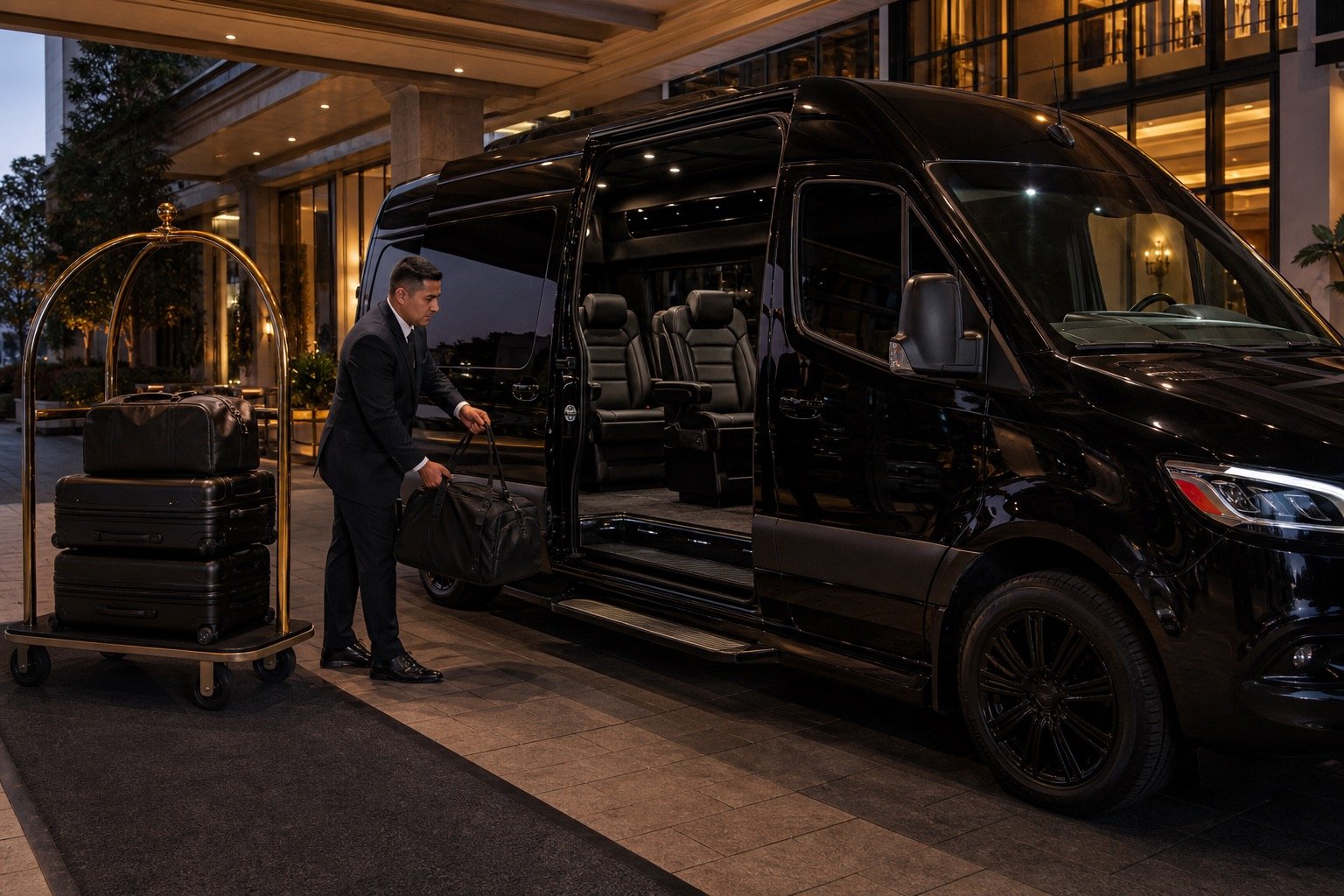
The Mercedes Sprinter is the vehicle that makes group event movement work: a party arriving together rather than trickling in across three cars, a principal travelling with the glam team and the garment bags, crew travelling with their equipment, and one vehicle at the venue door instead of three.
A Sprinter van solves three event problems at once: it keeps a group together, it carries people and their equipment in the same vehicle, and it takes vehicles out of the venue driveway, because one Sprinter replaces roughly three SUVs, which matters enormously at a congested entrance.
On an event night that usually looks like one specific movement: a principal, a stylist, a hair and makeup artist, an assistant and the garment bags all leaving together, instead of three cars leaving at three different times with the kit split between them.
It is also the right choice for room-block-to-venue transfers, crew and production movement, brand hospitality groups arriving as a party, wedding-party transport, and any movement where arriving together is part of the point.
It is the wrong choice for individuals on their own schedule, for a deliberately discreet arrival, or for a party small enough that an SUV is more manoeuvrable. Most events run a mix: Sprinters for volume, SUVs for small groups, sedans for individuals.
One caveat decides more of these bookings than anything else. Most venues treat a Sprinter as an oversized vehicle and limit where it may stop, so where it drops and where it waits has to be arranged with the venue in advance rather than assumed.
One Vehicle Instead of Three
The strongest argument for a Sprinter at an event is not comfort or capacity. It is arithmetic at the venue door.
A venue driveway can only physically process so many vehicles per minute. Moving a group in SUVs when it would fill one Sprinter means three vehicles arriving, three loading, three clearing: three times the driveway occupancy, three chauffeurs to coordinate, and three opportunities for one to be blocked by another. In a Sprinter it is one arrival, one load, one departure.
The second argument is that groups stay together. Split a party across three vehicles and they arrive across a ten-minute spread, in an order nobody chose, having had three separate journeys. For a brand hosting guests, a wedding party, or a crew that needs to arrive as a unit, that spread is the problem the transport was meant to solve.
The third is equipment. Crew, kit, cases, instruments, garment bags, signage and product all travel with the people rather than in a separate vehicle that then has to be coordinated separately.
The counterweight to all three is where the vehicle is allowed to stop. That is covered further down, and it is worth reading before the fleet is booked.
At a glance
| Best for | Group transfers, crew and equipment, brand hospitality parties, wedding parties, and any movement where arriving together matters. |
|---|---|
| Event nights | A principal, a glam team, a stylist and garment bags leaving as one movement rather than as three cars on three clocks. |
| Replaces | Roughly three SUVs per Sprinter, which is a significant reduction in vehicles at the venue door. |
| Equipment | People and gear travel in the same vehicle, so there is no separate equipment run to coordinate. |
| Capacity | Sized to the movement rather than to a number on a page. Give dispatch the passenger count and what is travelling with them, and the right vehicle is assigned. |
| Not ideal for | Individuals on their own schedule, deliberately discreet arrivals, very small parties, and groups leaving at several different times. |
| Chauffeur | Professional chauffeur included, pre-selected and background-checked. This is not a self-drive rental. |
| Where it can stop | Most venues treat a Sprinter as an oversized vehicle and restrict where it may drop and wait. That is arranged with the venue in advance, never assumed. |
| Clearance | Parking-structure height and turning space at the entrance are the two constraints worth checking before a vehicle is assigned. |
| Rates | A flat rate is quoted in writing before the movement is confirmed. Vehicle mix, hours and equipment all change the quote. |
| Typical use | Room block to venue, load-in and load-out, offsite programmes, airport group arrivals, getting-ready location to venue. |
| Point of contact | One named dispatch contact for the whole event, staffed 24/7. |
| Certificate of insurance | Issued on request for venue, production and procurement files. |
| Licensing | California TCP #40987 (CPUC), $5M commercial insurance. |
Where Sprinters Are the Right Answer
Room block to venue. The highest-volume repetitive movement at most conferences and multi-day events. A Sprinter running a scheduled transfer or a continuous guest shuttle loop moves far more people per driveway slot than a fleet of cars.
Crew and production movement. Early call times, load-in and load-out, with equipment travelling alongside the people who need it. This is the standard production vehicle for exactly that reason.
Getting-ready location to venue. A principal with a glam team, a stylist and garment bags, leaving a hotel or a house as one movement. This is the event-night booking, and it is set out in its own section below.
Brand and hospitality guest groups. When a company is hosting, guests generally need to arrive as a party rather than trickling in. See VIP hospitality transportation for how host movements are handled overall.
Wedding parties. The wedding party arriving together, and the late-night guest returns that are usually the least-planned leg of the evening.
Airport group arrivals. Where a group lands together, one Sprinter consolidates what would otherwise be several vehicles, with the flight tracked against its actual landing and 35 minutes of complimentary wait time measured from landing.
Offsite programmes and dinners. Moving a full group to a restaurant or activity and back, where splitting across cars creates a coordination problem at both ends.
Teams and touring parties. Sports teams, performing groups and touring crews, where the party and its equipment move as a single unit.
Booking Sprinters into an event fleet
-
Identify the group movements
Which movements involve a party travelling together, and which are individuals on their own schedule.
-
Ask the venue about oversized vehicles
Height clearance, turning space, and where a venue permits an oversized vehicle to drop and hold. Ask early and in writing, because some venues want it arranged well ahead.
-
Declare equipment as well as people
Kit, cases, garment bags and signage change how the interior is used and which vehicle is right.
-
Mix the fleet honestly
Sprinters for volume, SUVs for small groups, sedans for individuals and discreet arrivals.
-
Build in loading time
A group loads more slowly than a car. On a tight programme, allow for it.
-
Decide loop or scheduled transfers
For a large room block, one Sprinter running a loop often beats several vehicles running once.
-
Get the flat rate in writing
The rate is quoted in writing before the movement is confirmed, so the vehicle mix and the hours are agreed rather than assumed.
Sprinter vs. SUV vs. sedan for event movements
| Mercedes Sprinter | Escalade / Suburban SUV | Executive sedan | |
|---|---|---|---|
| Best use | Groups, crew, glam teams, equipment, shuttle loops | Small groups and luggage runs | Individuals, executives, discreet arrivals |
| Vehicles at the door | One instead of about three | Moderate | One per passenger group |
| Group cohesion | Everyone arrives together | Split across vehicles | Individual |
| Equipment and garment bags | Travels with the passengers | Limited | Minimal |
| Where it can stop | Often restricted to a specific lot or street, arranged with the venue in advance | Most drop-off points | Most drop-off points |
| Manoeuvrability | Needs room to turn and to wait | Flexible | Most flexible |
| Discretion | Conspicuous | Standard | Most discreet |
| Loading time | Longest | Moderate | Quickest |
Most events run all three. Matching the vehicle to the movement is where real efficiency comes from, and where a vehicle is permitted to stop is part of that decision, not an afterthought.
Sprinters at events: what to check
Do this
- Confirm venue height clearance and turning space before a vehicle is assigned.
- Ask the venue in advance where an oversized vehicle is permitted to drop and to hold.
- Declare equipment, garment bags and cases as well as passenger numbers.
- Use Sprinters for movements where arriving together matters.
- Build extra loading time into a tight run of show.
- Consider a shuttle loop rather than several one-off vehicles.
- Get the flat rate in writing before the movement is confirmed.
Avoid this
- Booking a Sprinter for one passenger travelling alone.
- Using a Sprinter for a deliberately discreet arrival.
- Assuming a Sprinter can stop where a sedan stops.
- Leaving an oversized-vehicle arrangement to be sorted out on the night.
- Sending a Sprinter to a venue with restricted access unchecked.
- Booking one vehicle type for every movement at an event.
- Expecting a group to load as quickly as a car.
The Event-Night Movement: Principal, Glam Team and Garment Bags
There is one movement a Sprinter is better at than anything else on the road, and it is worth naming plainly, because it is the reason most event bookings for this vehicle come in.
A principal is getting ready at a hotel or a house. A stylist, a hair and makeup artist, an assistant and a publicist are part of the day. There are garment bags that should not be folded, a shoe case, a steamer, and a kit that took an hour to pack. Split across three cars, that becomes three departure times, the garment bags in one vehicle and the steamer in another, and a phone call at the door asking who has the shoes.
In one Sprinter it is a single departure. The team travels with the principal, the garment bags travel with the people who packed them, and the person who needs the kit is in the same vehicle as the kit. A van also has interior length that a car trunk does not, which is the practical reason garment bags end up here rather than folded into a sedan. If the schedule slips, it slips once instead of three times.
The same shape repeats without the glam. A photographer and an assistant with cases. A brand team with product and signage. A musician with instruments. A press group moving between two locations on one clock. What these have in common is that the people and the things they need cannot usefully be separated, and separating them is what creates the problem on the night.
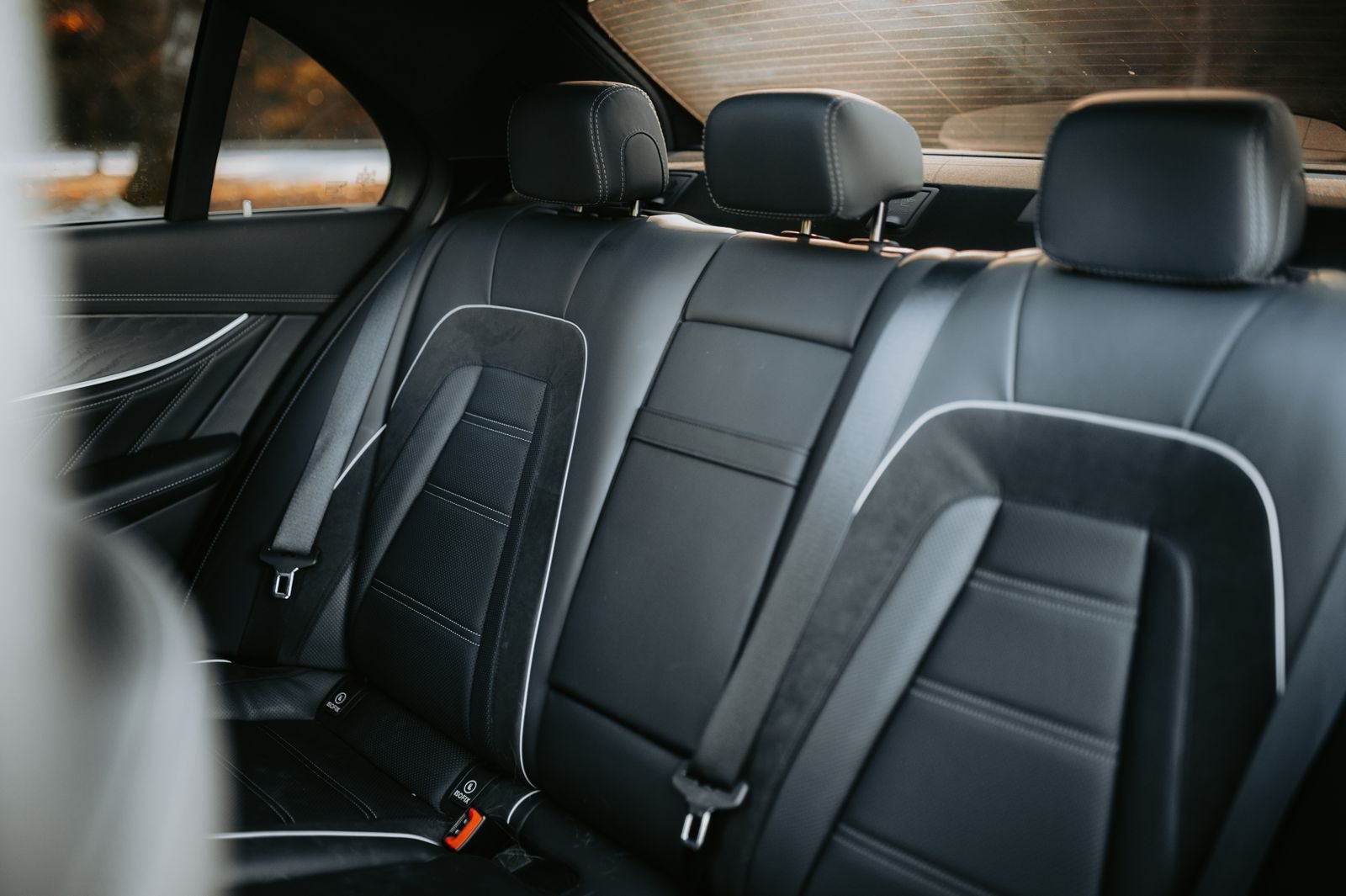
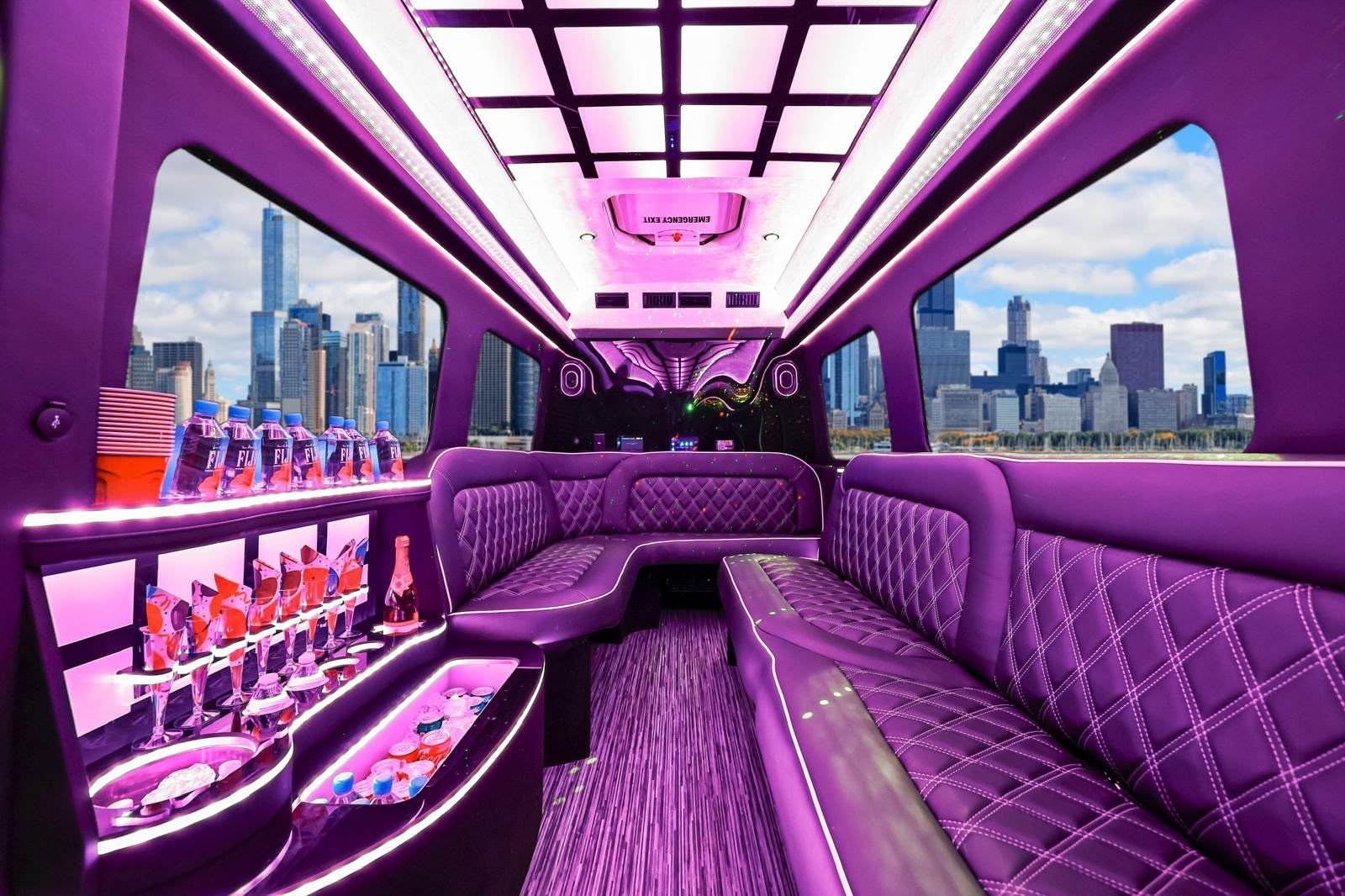
Tell dispatch what is actually travelling. Hanging garment bags, a steamer, hard cases and rolling kit all change how the interior gets used, and that changes which vehicle is right for the movement. Interior layouts differ between vehicles, so ask what a specific vehicle has rather than assuming a particular seat configuration or fitting is aboard.
Where a Sprinter Is the Wrong Choice
It is worth being direct about this, because booking Sprinters for everything is as inefficient as booking SUVs for everything.
Individual executives. Someone travelling alone on their own schedule should be in a sedan. Putting one passenger in a Sprinter wastes capacity and gives them a less appropriate vehicle.
Discreet VIP arrivals. A Sprinter is a conspicuous vehicle. Where an arrival should be understated, a sedan or SUV is the better call.
Movements needing manoeuvrability. Sprinters need more room to turn and to wait. At venues with tight access, a constrained porte-cochère, or restricted height clearance in a parking structure, a smaller vehicle is more practical, which is why the venue is asked in advance what it can physically take.
Small parties. A small party travelling light is comfortable in an SUV, which is more flexible at a congested door.
Movements on different schedules. A Sprinter is efficient when a group moves together. If the same group needs to leave at six different times, the vehicle stops being an advantage.
The general rule: Sprinters for volume and cohesion, SUVs for small groups and luggage, sedans for individuals and discretion. Most events need all three, and matching vehicle to movement is where real efficiency comes from. The mechanics are set out on multi-vehicle event transportation.
Oversized Vehicles and Where a Sprinter Can Actually Stop
This is the constraint that surprises people, and it belongs next to the clearance caveats above rather than in a footnote.
Most venues treat a Sprinter as an oversized vehicle, and oversized vehicles are handled differently from cars. Space for them is usually limited. Some lots exclude them outright. Where they are accepted it is often in a different lot from the cars, sometimes at an additional charge, and frequently only if arrangements were made ahead of time. Some venues want that arrangement made well before the event date rather than in the final days.
So the practical rule is simple. A Sprinter goes where the venue permits an oversized vehicle to go, and that has to be arranged rather than assumed. A sedan can usually be dropped at the main entrance and sorted out on the night. A van often cannot.
What that means for planning. Ask the venue early, in writing, what it accepts and where. Expect the answer to name a specific lot or a specific street rather than the door. Expect drop-off and pickup to be in different places at some venues. And build the walk into the timing, because a drop-off point two minutes further out is four minutes of programme on a tight evening.
What this page will not tell you is where the vehicle will wait. On any controlled event the vehicle stops and waits only where it is legal and permitted at that moment, and event staff, venue staff, the Department of Transportation, law enforcement and posted signage decide that on the night. Where a venue publishes its own oversized-vehicle instructions, those instructions govern. Our dated event pages carry the published instructions for specific nights so that nothing time-sensitive lives on a vehicle page.
Practicalities Worth Settling Early
Venue access. Ask whether the venue can physically accommodate a Sprinter: height restrictions in parking structures, turning space at the entrance, and where an oversized vehicle is permitted to stop between movements. The venue's answer governs, and it is easily checked in advance rather than discovered on arrival.
Where the vehicle waits. A Sprinter takes more room to wait than a car does, and a large vehicle occupying a driveway it cannot easily leave is a real problem. Ask the venue in advance where an oversized vehicle may hold. On the night, the vehicle waits only where it is legal and permitted, as directed by venue and event staff and posted signage.
Equipment and luggage. Tell dispatch what is travelling alongside the passengers. Cases, kit, instruments, garment bags, signage and product all affect how many passengers travel comfortably, because a number on a page assumes people, not people plus a production's worth of gear.
Loading time. A larger group takes longer to load than a car does. On a tight run of show, build that in rather than assuming a Sprinter loads as quickly as an SUV.
Multiple trips versus multiple vehicles. For a large room block, one Sprinter running a loop is often better than several vehicles running once. The guest shuttle service page covers when a loop beats scheduled transfers.
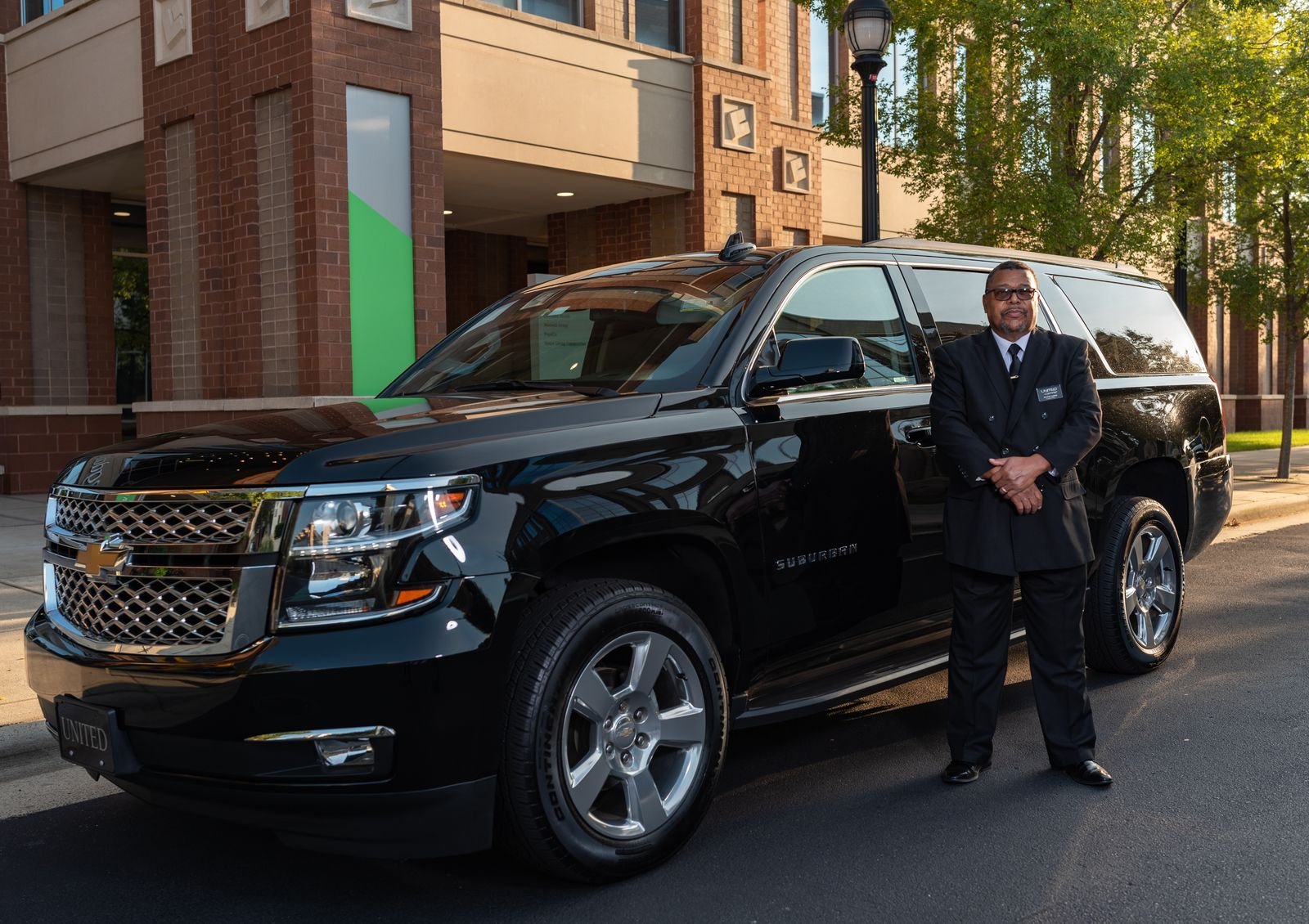
A chauffeur is included. This is a chauffeured vehicle, not a rental. The chauffeur is a pre-selected, background-checked professional who positions the vehicle where it is permitted, coordinates with dispatch and handles the loading.
The rate, in writing. A flat rate is quoted in writing before the movement is confirmed. Vehicle mix, hours, equipment and the number of legs all change it, which is why the brief matters more than the vehicle name.
Compliance. California TCP #40987 (CPUC), $5M commercial insurance, with a certificate of insurance on request for venue and production files.
Awards Season and Premieres
Awards nights are the hardest version of everything above. Streets around a venue change on the day, the arrival window is narrow, and a large vehicle has fewer places it is permitted to stop than a sedan does. If you are moving a nominee, a table of guests, a glam team or a press group, the vehicle choice and the drop-off plan have to be decided together rather than separately.
That planning lives on two other pages instead of being repeated here. Award show transportation in Los Angeles covers how arrival windows, departure order and multi-vehicle movements are run across the season. The Emmys 2026 black car service page carries the arrival and departure instructions published for that specific night, with the sources cited and a verification date, which is where anything time-sensitive belongs.
Nothing on this page is an access arrangement of any kind. Lux4Rides has no control over checkpoints, credentials, or where a vehicle is permitted to stop on an event night, and books the vehicle only.
An Independent Transportation Provider
Lux4Rides is an independent transportation provider. It is not affiliated with, endorsed by, or an official provider of the Television Academy, the Emmy Awards, NBC, Peacock, or any venue, network or event organisation named on or linked from this page.
Admission, credentials, checkpoints, parking and access are controlled by the event organisers, the venues and public authorities. Booking transportation does not include event tickets, credentials, parking passes or access permissions, and it does not create a right to stop or wait inside a controlled area.
Moving a larger group, or more vehicles than one Sprinter holds?
Send the date, the number of passengers, every pickup address, what is travelling with them in the way of garments and equipment, the hours you expect to need and a day-of contact. Dispatch will confirm what fits and what a second vehicle would change.
Prefer email? vip@lux4rides.com
Booking one vehicle instead? Book an individual ride
An email starts a proposal. It does not confirm a reservation. Availability, vehicle assignment and price are confirmed in writing.
Choose your vehicle
Tell us your passenger and luggage count and we’ll recommend the right vehicle — every car late-model, immaculate, and driven by a pre-selected professional chauffeur.
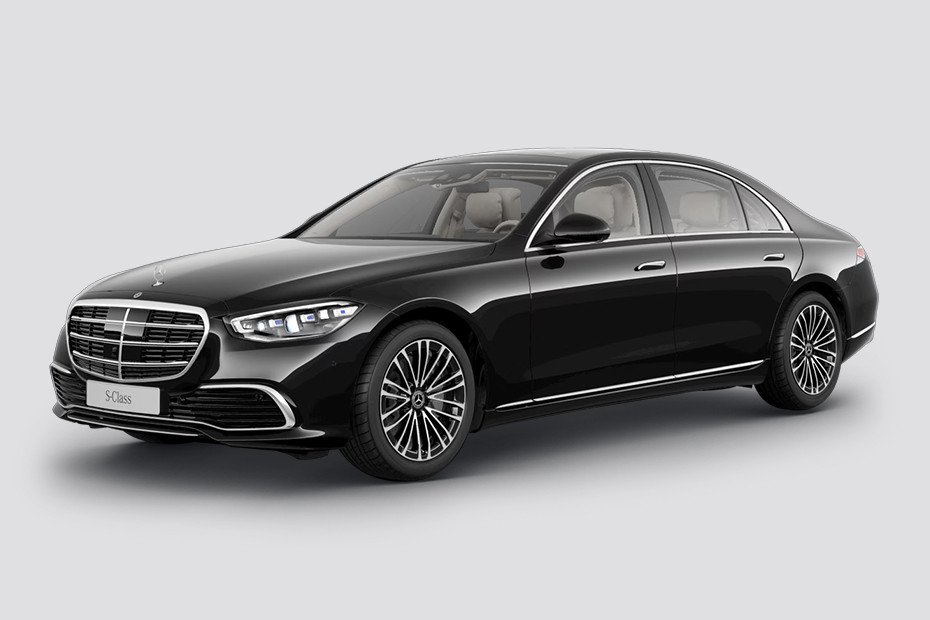
Executive Sedan
Mercedes S-Class class. Quiet, business-ready comfort for 1–3 passengers with luggage.
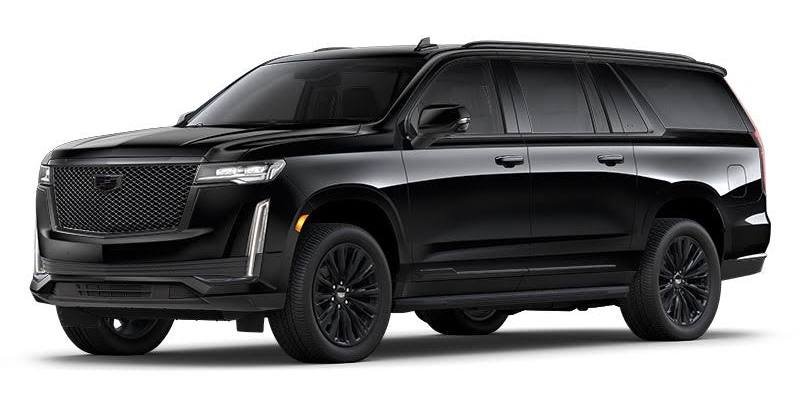
Luxury SUV
Cadillac Escalade / Suburban for families, extra luggage, and a higher, statelier ride.

Sprinter Van
Mercedes Sprinter for groups, crews, and events with plenty of cargo room.
A better ride starts with a better-treated chauffeur
Lux4Rides was built by CEO Sam Altabbaa on a simple idea: pay professional chauffeurs fairly and you get calmer, safer, more gracious rides. Cut-rate apps squeeze drivers — and you feel it in the car. We don’t.
Chauffeurs paid fairly
Our drivers earn a real, respectful wage — so they’re relaxed, professional, and genuinely glad to take care of you.
Hand-selected & VIP-trained
Every chauffeur is pre-selected, background-checked, TCP-licensed, and trained to a discreet VIP standard — no random gig drivers.
Flat rates, no surge
The price you see is the price you pay — no peak-hour surge, no hidden fees, and 24/7 dispatch that watches your flight.
Related event, awards and fleet pages
Sprinter Van Event Transportation in Los Angeles FAQ
A Mercedes Sprinter carries substantially larger groups than an SUV, enough that one Sprinter typically replaces around three SUVs on a group movement. The usable number depends on the specific vehicle configuration and on how much is travelling with the passengers, so give dispatch both the passenger count and the luggage or equipment and the right vehicle is assigned.
When a group needs to arrive together, when people and equipment should travel in the same vehicle, or when reducing the number of vehicles at a congested venue door matters. One Sprinter instead of three SUVs is a meaningful difference at a single-driveway venue.
That is one of the main reasons this vehicle gets booked on an event night. The stylist, the hair and makeup artist, the assistant, the garment bags and the kit travel in the same vehicle as the principal, so there is one departure time instead of three and nobody arrives without the case they need. Tell dispatch what is hanging and what is in hard cases, because that changes how the interior is used.
Wherever it is legal and permitted at that moment, and not anywhere we can promise in advance. Most venues treat a Sprinter as an oversized vehicle and direct it to a specific lot or street rather than the main door, and event staff, venue staff, the Department of Transportation, law enforcement and posted signage control the outcome on the night. Ask the venue early what it permits, because a van has fewer options than a car.
Usually yes. Space for oversized vehicles is commonly limited, some lots exclude them, and where they are accepted it can be in a different lot and sometimes for an additional fee. Several venues ask for the arrangement to be made well before the event date. Treat it as a planning item at the start rather than a detail for the night itself.
For someone travelling alone on their own schedule, for a deliberately discreet arrival, at venues with tight access or height restrictions, for very small parties, and where the same group needs to leave at several different times. In those cases an SUV or sedan is better.
Yes. This is chauffeured service, not a rental. The chauffeur is a pre-selected, background-checked professional who positions the vehicle where it is permitted, coordinates with dispatch and handles loading.
Yes, and it is one of the main reasons crews book them. People and kit travel together rather than requiring a separate equipment run. Tell dispatch what is travelling, because equipment and garment bags reduce how many passengers travel comfortably compared with a number on a page.
Often, but it should be checked before a vehicle is assigned rather than discovered on arrival. Height clearance in parking structures, turning space at the entrance, and where an oversized vehicle is permitted to hold are the common constraints, and the venue's answer governs.
Yes, and it is a common request for glam teams, press groups and guest parties. Awards nights add narrow arrival windows and street changes on the day, so the vehicle and the drop-off plan get decided together. Anything time-sensitive for a specific night lives on the dated event page for that event, not here.
For a large room block, often yes. A single vehicle running a continuous shuttle loop moves more people per driveway slot than several vehicles each running once. Whether a loop or scheduled transfers works better depends on volume and timing.
Yes, and most events should. A typical fleet runs Sprinters for bulk guest transfers and crew, SUVs for small groups and luggage, and sedans held for individuals and discreet arrivals, all coordinated through one dispatch contact.
A flat rate is quoted in writing before the movement is confirmed. It reflects the vehicle mix, the hours, the number of legs and what is travelling with the passengers, which is why the brief matters more than the vehicle name.
Yes. California TCP #40987 (CPUC), $5M commercial insurance, with a COI issued on request for venue, production or procurement files. Many venues require it before a vehicle is permitted on site.
Planning more than a single ride?
Moving a principal with a glam team, a crew with equipment, a wedding party, or several hundred guests between a room block and a venue? Email vip@lux4rides.com or call (424) 209-8001.
Book Sprinter vans into your event fleet
Tell us which movements need a group travelling together, what is travelling with them, and which venues are involved. We will size the fleet, raise the oversized-vehicle question with the venue early, mix in SUVs and sedans where they fit better, and quote a flat rate in writing before anything is confirmed. Email vip@lux4rides.com or call (424) 209-8001.